A newly formed partnership of organizations and states will lead the development of new core arts standards for the United States.
The National Coalition for Core Arts Standards (NCCAS) plans to complete its work and release new, national voluntary arts education standards in early 2014. The standards will describe what students should know and be able to do as a result of a quality curricular arts education program.
The current National Standards for Arts Education have been adopted or adapted by forty-nine state departments of education, and have become the benchmark document by which K-12 arts learning is measured. Curriculum designers, teacher training programs, funders, and federal and state policy makers have relied on the original 1994 national arts standards and, more recently, the 2005 Standards for Learning and Teaching Dance in the Arts to help guide their decision-making.
A group of NEA fine and performing arts educators, patrons and advocates who lobby to keep arts education a vibrant, vital and required part of the curriculum for our nation's students, schools & communities. NEA caucuses are internal member-only groups. Caucuses exist and operate independently of NEA and have no authority to speak for, or act on behalf of, NEA.
Showing posts with label Arts Skills Map P21st Century Skills. Show all posts
Thursday, May 30, 2013
Tuesday, July 3, 2012
STEAM--NOT STEM WHITEPAPER
An agreement on what drives the US economy in the future
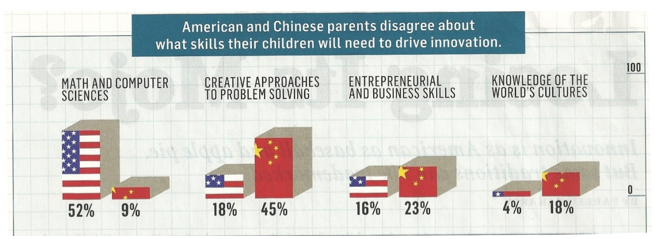
Even in today’s very politically partisan time there is one point of agreement between most of the political leaders when it comes to the future of our economy – it is
The strength of the US economy in the future will be determined by our success in innovation versus the existing developed nations and their economies and, probably more importantly, the emerging nations and their rapidly developing economies.
Clinton’s former Secretary of Education, Richard Riley, summed up this need for innovation to drive our future when he predicted,
“The jobs in the greatest demand in the future don’t yet exist and will require workers to use technologies that have not yet been invented to solve problems that we don’t yet even know are problems.”
The strength of the US economy in the future will be determined by our success in innovation versus the existing developed nations and their economies and, probably more importantly, the emerging nations and their rapidly developing economies.
Clinton’s former Secretary of Education, Richard Riley, summed up this need for innovation to drive our future when he predicted,
“The jobs in the greatest demand in the future don’t yet exist and will require workers to use technologies that have not yet been invented to solve problems that we don’t yet even know are problems.”
Sunday, December 4, 2011
Reources to Implement Arts Skills Map
Resources
Organizations
The Partnership for 21st Century Skills
P21 is a national organization that advocates for 21st century readiness for every student. As the United States continues to compete in a global economy that demands innovation, P21 and its members provide tools and resources to help the U.S. education system keep up by fusing the 3Rs and 4Cs (critical thinking and problem solving, communication, collaboration, and creativity and innovation). While leading districts and schools are already doing this, P21 advocates for local, state and federal policies that support this approach for every school.
Saturday, December 3, 2011
Action Steps for Implementing the Arts Skills Map
Suggested Action Steps
State PolicymakersIf you are a state policymaker, consider using the 21st Century Skills Map in the Arts in some of the following ways:
- Ensure that professional development professionals at the state level are familiar with the map and how it can be used in schools and districts
- Use the map as a resource in reviewing standards in the Arts
- Distribute the map broadly to educators throughout the state
- Engage with arts advocacy organizations about how the map can support arts and 21st century skills development If you are a K-12 practitioner, consider the following action steps:
Subscribe to:
Posts (Atom)