Wednesday, September 5, 2012

Artful Thinking: Maryland Middle School Proves Arts Ed Improves Grades and Behavior

by Liz Dwyer
on September 1, 2012 at 3:00AM PDT
Great YOU TUBE Video in Read More
Thanks to Stacey Kimberlin of Des Moines Education Association for this Post

Arts exposure makes students more altruistic, civically engaged, and socially tolerant. Need more proof of the transformation that happens when arts education is taken seriously in schools? Look no further than this inspiring profile of Bates Middle School, a public school in Annapolis, Maryland from our friends over at Edutopia. Bates has a full visual and performing arts program integrated across the curriculum and they've seen significant improvements in student behavior and academic performance.

The value of arts in education

1:48 p.m. EDT, September 4, 2012
 
One dreary spring morning, I entered Robert Moton Elementary as opera resounded through its halls, stirring my soul like never before. As a school psychologist with limited exposure to classical genres, I was startled but tremendously invigorated by this music. I then noticed some students bopping down the halls — also seemingly uplifted.
 
I immediately sought out the assistant principal, a former music teacher who selects Moton's morning melodies, begging him to identify this inspiring music. "'Nessum Dorma,' Pavarotti's most famous work," he smilingly responded.
 
Well, I thought, if a geezer who failed art, hated clarinet and has no sense of rhythm could feel rejuvenated by a shot of culture, just think of how it might benefit struggling students possessing more talent and inspiration.

Wednesday, August 22, 2012

10 Ways to Support Arts Education

Kristen Engebretsen of AMERICANS FOR THE ARTSThe ARTS EDUCATION NETWORK is another reason that arts professionals and passionate advocates should be members of AMERICANS FOR THE ARTS
Originally posted August 11, 2011

This week I got an email from someone concerned about the budget cuts to arts education and inquiring about what they could do to help keep the arts in schools.

In the spirit of my colleague Randy Cohen’s popular post (Top 10 Reasons to Support the Arts), I am presenting my own Top 10 Ways to Support Arts Education.


10. Volunteer your time, resources, skills:Many schools would appreciate your time as a chaperone, your skill as a teaching artist, or your donations of money, costumes, rehearsal space, etc.

9. Know the facts: Stay on top of current arts education research, trends, and news articles. Start with Reinvesting in Arts Education, which summarizes research on the topic. Use this data in your messaging when you speak to elected officials or school leaders.

8. Get involved politically: Tell your elected officials why arts education is important. Ask your members of Congress to keep the arts listed as a core subject during the reauthorization of the Elementary and Secondary Education Act.

Saturday, August 18, 2012

Help US Advocate for the National Endowment for the Arts

Tell Legislators that the Arts Mean Jobs & a Strong Economy!
The other NEA (National Endowment for the Arts) funds grants to dance, design, folk & traditional arts, literature, local arts agencies, media arts, multidisciplinary, museums, music, musical theater, opera, presenting, theater, and visual arts.  MANY OF THESE ARTISTS WORK IN OUR SCHOOLS.  Please take a few minutes to write to your Members of Congress to urge them to support the National Endowment for the Arts in widening citizen access to the cultural, educational, and economic benefits of the arts, and advancing creativity and innovation in communities across the United States.  If you've ever used CAP WIZ in writing your legislator through the Association, you know how easy it is.  The ARTS ACTION FUND of AMERICAN FOR THE ARTS (Let me encourage you to join), uses this as well and will allow you to paste pieces of pre-written messages AND add your own original words.


To learn more about the programs of the National Endowment for the Arts and to see the Americans for the Arts Position/Policy paper on the National Endowment for the Arts, click here.  Please download, save and share this piece.  Please take five or ten minutes to do this. 

Friday, August 17, 2012

NATIONAL ARTS IN EDUCATION WEEK: SEPTEMBER 9–15

In July 2010, the U.S. House of Representatives passed a resolution declaring the week following the second Sunday of September as National Arts in Education Week. Celebrate with us this year, September 9–15, 2012. Take the opportunity to draw attention to arts education in your school and build momentum for a great school year. Americans for the Arts will celebrate by hosting our biannual blog salon about arts education topics on ARTSblog. This blog salon will feature about 20 posts by arts and education leaders throughout the week, all discussing the intersection between the arts and the new Common Core State Standards. Follow the salon by using this link to the arts education section of ARTSblog.

Tuesday, August 14, 2012

Cirque du Soleil's QUIDAM--Arts Integration at Work in OUR Work

We integrate our ARTS disciplines all the time...maybe that's why the STEAM initiative isn't such a threat to us.

A little bit circus, a little bit dance, a little bit concert, a little bit drama all rolled up into one brilliant ARTS piece--Quidam.  In this post, you'll find no crunched numbers, no great quotes, no charts or graphs.  Just a little bit of inspiration, fun and the art of what we artist's do--making something that isn't easy, look easy.  Take a few minutes to enjoy.  We recommend Cirque.  If you haven't seen QUIDAM, you might just enjoy it.

Sunday, August 12, 2012

Why Arts Education Must Be Saved

from EDUTOPIA

Schools draw on the community to bring art and music to students.

Almost every one of us can point back to a creative pursuit, in or out of school, that enhanced our skills, knowledge, or understanding. Yet the majority of secondary school students in the United States aren't required to enroll in arts courses, many elementary schools nationwide lack art classes or activities, and arts and music instruction is often the first thing to go when schools feel the pressure to improve test scores.

Happily, from this admittedly grim background spring many rays of hope. In our special report on arts education, Edutopia paints a bright picture of how schools are forging innovative community partnerships to bring rich, academically integrated arts curriculum to their students:

More Resources for Art Educators

Thanks to our friend Jennifer Jenkins for sharing even more great art education resources from online university.  Lots of links to online museum exhibits and on painters.  We appreciate your contribution Jennifer.

Visual art is one of the oldest forms of human expression, stretching all the way back to the cave paintings at el Castillo in Northern Spain to the massive installations by Damien Hurst in the 1990s. This resource will concentrate mainly on visual art, such as sculpture, painting, ceramics and drawing, some specific periods and movements in the history of art and galleries and influential museums which house online resources for those interested in viewing art and learning more about particular forms.

Saturday, August 11, 2012

ROMNEY ANNOUNCES RYAN AS RUNNING MATE

If there was ever a doubt that Wisconsin-like, anti-education politics will be a part of this race--which there was not--today's announcement makes the threats to quality public education even more pressing.  As ARTS EDUCATORS we should have some serious concerns about this candidate and his running mate's views on what is "essential" in our "public schools."


Friends:

Can you believe it? Governor Romney has doubled down on failed economic policies, those of which we know harm the middle class and do nothing to invest in our kids and schools. By naming Paul Ryan as his Vice Presidential running mate, it is crystal clear where he wants to take the country.

Ryan has repeatedly supported cuts to education funding, including blocking support intended to help avoid educator layoffs. Ryan has proposed cutting $1.1 billion from early childhood education, which would deny more than 2 million poor children the opportunity for high-quality early education.

Friday, August 10, 2012

London's 2012 Cultural Olympiad

The London 2012 Cultural Olympiad is the largest cultural celebration in the history of the modern Olympic and Paralympic Movements. Since 2008, the Cultural Olympiad has featured programmes and projects inspired by London 2012, funded by our principal funders and sponsors. As part of the Cultural Olympiad:
  • More than 16 million people across the UK took have taken part in or attended performances.
  • Over 169,000 people have attended more than 8,300 workshops.
  • More than 3.7 million people took part in nearly 3,700 Open Weekend events.
  • Some 2,500 cultural projects have been awarded the London 2012 Inspire mark

Thursday, August 9, 2012

Why We Should Bring Back the Arts Olympics

by  HUFFINGTON POST 8/5/2012, Posted by NEA FAC on August 9, 2012


And then in the second half, we watch her do nothing but sit in a chair in the middle of an empty room and stare at thousands of strangers in the eyes, every single day, for over two months.

The event was a feat of performance endurance, surely, and also a beautiful collection of moving images, with thousands of visitors rounding the globe just to sit with Abramovic in New York and join in the project. It was art and prowess mixed, the largest performance exhibition ever mounted at the MoMA, and the longest duration piece ever performed in a museum, spanning 736 hours and 30 minutes.

Wednesday, August 8, 2012

High-Poverty Schools Awarded $1.2 Million in Arts Grants Awarded to Train Educators


The U.S. Department of Education today announced the award of more than $1.2 million in grants to school districts in California, Florida, Nevada and New York to train arts educators serving high-poverty schools.

Under the Arts in Education-Professional Development for Arts Educators program, the funds will support high-quality model training programs in elementary and secondary education for music, dance, drama, media arts, or visual arts. The grants are especially targeted at schools with students from low-income backgrounds.

"Creating by doing is a uniquely powerful way to learn. That's why I think a high-quality arts education is absolutely critical to providing all students with a world-class education,” said U.S. Secretary of Education Arne Duncan. “The study of the arts can both significantly boost student achievement and give students a reason to look forward to coming to school. All children should have arts-rich schools."

Marvin Hamlisch, maestro of the perfect note

August 8, 2012, 8:00 a.m.
Hearing the news of Marvin Hamlisch's sudden passing, I am suddenly awash in the sound of his music and the flood of tears unleashed by its memory. There are movies that would not have been the same without it, and a Broadway musical that will never be forgotten for it.

But what Hamlisch perhaps played best was the human heartstrings, plucking at our emotions one by one, ranging across the octaves of sadness and joy, letting the feelings resonate for as long as he dared.

Three Oscars, a Tony, four Emmys, four Grammys — they seem now the briefest of nods, insufficient for a lifetime's work of filling our films, Broadway musicals and TV shows with his artistry.


Music Education Links

Music Education and Intergration Tools

1.) Stanton’s Sheet Music is a site that provides printable sheet music for Orchestra, Concert Band, Jazz, Marching Bang, Choral, Handbell, and General music.

2.) K-12 Resources for Music Educators is a valuable resource for music educators and students of all areas and educational levels. Regularly updated. For over fifteen years, the most visited and valued music education resource website available internationally. Carefully researched and commercial free.

3.) The Virtual Piano is a web based piano that you can play using the keyboard or mouse.

4.) The Music Resources Wiki is a great resource for finding other resources. I highly recommend seeing what you can find.

Art Education Links


Art Integration Tools and Resources
1.) Art History Resources on the Web is a place to find various Art from different countries and time periods. A valuable resource for students who might be interested in trying to recreate a famous piece of artwork, or make their own rendition. 

2.) Smarthistory.org is a free, not-for-profit, multi-media web-book designed as a dynamic enhancement (or even substitute) for the traditional art history textbook.

3.) Art Education 2.0 is a Social Network for Art Teachers to share, discuss, and find other teachers who are using technology in the art classroom.

4.) Artsonia is the words largest online database of art created by students and shared by students. It is a chance to get your student’s work displayed for the world to see.


Tuesday, August 7, 2012

Public schools' 'pay to play' fees: By the numbers

In the face of budget cuts and rising costs, public schools across the country are making ends meet by nickel-and-diming students
In some financially struggling school districts, students have to pay fees to participate in extracurricular activities... or not participate at all.
                       
Public schools are supposed to be free. But faced with budget cuts, rising staff costs, and declining tax revenues, many are instituting "pay to play" fees, charging students extra for everything from electives to after-school sports — and even some required classes, like French and basic sciences. Here, a brief guide, by the numbers, to these "controversial" fees:

$18
Course supplies fee for students taking English 9 at Dakota Ridge High School in Littleton, Colo.

$38
Fee for students taking Honors English 9

$75
Course supplies fee for students taking French IV at Lakota Local Schools in Liberty Township, Ohio

Lawsuit, bill aim to keep K-12 education free in California

Legislation and an ACLU lawsuit tackle the increasing use of fees at public schools, a trend that is unfair to low-income students and increases disparities.

SACRAMENTO — Not every proposed law is historic or sweeping. Some merely are pretty good ideas — perhaps even important for a low-income kid.

One such bill is among the hundreds awaiting action as the Legislature heads into its final month. The measure's goal is to stop schools from socking students with illegal fees.
Fees for sports and field trips and textbooks and art, for example.

They're being charged despite a guarantee in the California Constitution of a free K-12 education.

Monday, August 6, 2012

Beware! Sneaky Reformer Trick in L.A.

July 30, 2012--posted on the NEA FAC blog August 6, 2012 

On August 14, there will be a benefit concert in Los Angeles to “honor” teachers.

The concert is a promotion for a new “Superman”-style film that vilifies public schools and promotes privatization.

The film celebrates the “parent trigger” law, which gives parents the power to seize control of their school, fire the staff, and turn it over to a charter chain. The parent trigger was promoted by charter advocates and billionaire foundations Broad, Gates, and Walton.

Strange way to “honor” teachers–by firing them and giving the school to a non-union private entity to manage, which may hire only young teachers willing to work a 50-60 hour week at low wages. More “honors” like this and there won’t be a teaching profession in America, just teaching temps.
The concert is sponsored by Walmart (the Walton family) and Walden Media. The Walton Family Foundation gave out $159 million last year for charters and vouchers.

Saturday, August 4, 2012

Why Are We Raising Robots?


Why Are We Raising Robots? from the website
LET CHILDREN PLAY: The Freedom to Discover Greatness with thanks to Lori Brown Burris

Why Are We Raising Robots?

July 17, 2012


by Meryl Neiman/ Playdate Planet

As parents and as a society, we are concerned about making sure that our children are prepared to compete in the new global economy. I get that. We all want our children to find success and happiness. And nobody wants their 40 year old offspring still living in the basement!

But here̢۪s what doesn̢۪t make sense to me. The way that we have responded to this challenge has been to push kids away from play and unstructured free time into academically focused pre-schools, supplemental tutoring program,s like Kumon, and absurdly early organized sports teams. We are building our child̢۪s college application resume from the time he can toddle across the floor. This push-down of academics and parent-directed sports and activities may contribute to a child̢۪s earlier understanding of basic reading and math fundamentals and an ability to follow directions, but there̢۪s no evidence that this early skill development provides any academic advantage over time. We are sacrificing creativity and emotional resilience, two important traits learned best through play, traits that the research clearly shows are hugely important to a child̢۪s future success.

Thursday, August 2, 2012

STEAM Ahead: Merging Arts and Science Education

by: Kelly Chen and Imani M. Cheers of PBS

Akua Kouyate, Wolf Trap's senior director of
education (Courtesy of Teddy Wolff)
During tough economic times, arts and music programs are often some of the first programs cut in schools. But at Wolf Trap's Institute for Early Learning Through the Arts , investing in arts education has been a priority for the past 31 years.
A study by the National Endowment for the Arts shows that students from lower socio-economic backgrounds who actively participated in the arts tended to score better in science and writing, and were more likely to aspire to college.

The study used survey data gathered over 20 years that followed socially and economically disadvantaged students, from kindergarten into their early twenties.

Tuesday, July 31, 2012

Standardized Testing in the Arts. No. Please No.

by Nancy Flanagan from EDUCATION WEEK on June 19, 2012 4:26 PM

When it comes to assessing music students, and their learning, I can say with confidence that I am a bona fide expert.

I did this work for thirty years--by my count, evaluating well over 5000 music students, giving them grades and feedback. Which only means I had lots of practice--not necessarily proficiency--but depth of experience matters here. Over three decades, I developed and continuously adjusted a conceptual framework for evaluating the most important skills and knowledge of student musicians, using (and often rejecting) multiple models and metrics. I did it wrong before I did it right. Once I understood that I finally had it right, I kept fine-tuning.

Monday, July 30, 2012

So How DO We Measure Learning in the Arts...

by Nancy Flanagan on June 27, 2012 4:37 PM

... if we don't use some kind of standardized assessment?

My previous blog has been re-posted, dissected, praised and scorned. But the question is still out there: How do we measure learning in the arts?

Two critical observations:

• Contrary to what some commenters seem to think, nobody is suggesting that learning in arts education can't or shouldn't be assessed. The blog wasn't a half-baked claim that the arts are too creative/expressive/ethereal/woo-woo for teachers to properly evaluate what their students have produced and learned. Assessing learning in the arts is precisely how students grow in arts knowledge and skill--with the assistance of their teachers, who use those assessments to tailor and improve their instruction as well.

• This contention--that we can't measure something unless we standardize it--is driving a whole lot of truly damaging, excessive and deceptive testing right now, and not just in the arts. How many times have we heard this: "If we don't use standardized tests, how will we really know what students have learned? Or how they compare to kids in Singapore?"

N.C. to Require Arts Integration in Teacher-Prep Programs


Efforts to promote integration of the arts across the curriculum got a boost in North Carolina last month, when Democratic Gov. Beverly Perdue signed legislation stipulating that those studying to become elementary teachers get some grounding in the concept.

The measure, contained in a broader education bill, says elementary education programs "shall ensure" that teacher candidates "are prepared to integrate arts education across the curriculum."

Arts integration is nothing new, but it does seem to be building some momentum lately. For example, I recently wrote an EdWeek story about initiatives to promote adding an "A" for the arts into the STEM (science, technology, engineering, and mathematics) acronym, so that the arts are infused across the disciplines.

Saturday, July 28, 2012

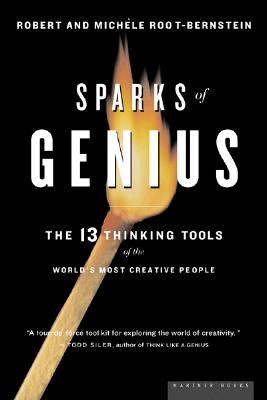
ABSTRACT of Sparks of Genius – The 13 Thinking Tools of the World’s Most Creative People.

By Robert & Michele Root-Bernstein.

Chapter 1 – Rethinking Thinking
Invention presupposes imagination. Einstein once revealed to his friend, “The words of the language, as they are written or spoken, do not seem to play any role in my mechanism of thought” Some scientists insist that thinking in feelings and mental images can be rationally manipulated.

MIT Prof. Richard Feynman (Nobel Prize winner) told once, “Mathematics is the form in which we express our understanding of nature, but it is not the content of that understanding”

In Creating minds and Frames of mind, scientists are logico-mathamatical thinkers, poets and writers are highly verbal thinkers, psychologists as intrapersonal thinkers and politicians as interpersonal thinkers.

Poincre (greatest mathematician in19th century) once said, “it is by logic we prove, but by intuition that we discover...”

French physician Armand Trousseau agreed, “All science touches on art; all art has its scientific side. The worst scientist is he who is not an artist; the worst artist is he who is no scientist.

Sculptor Naum Gabo once wrote. “Every great scientist has experiences a moment when the artist in him saved the scientist.”


Various professions including medicine are beginning to recognize intuition as a necessary part of disciplinary thinking.